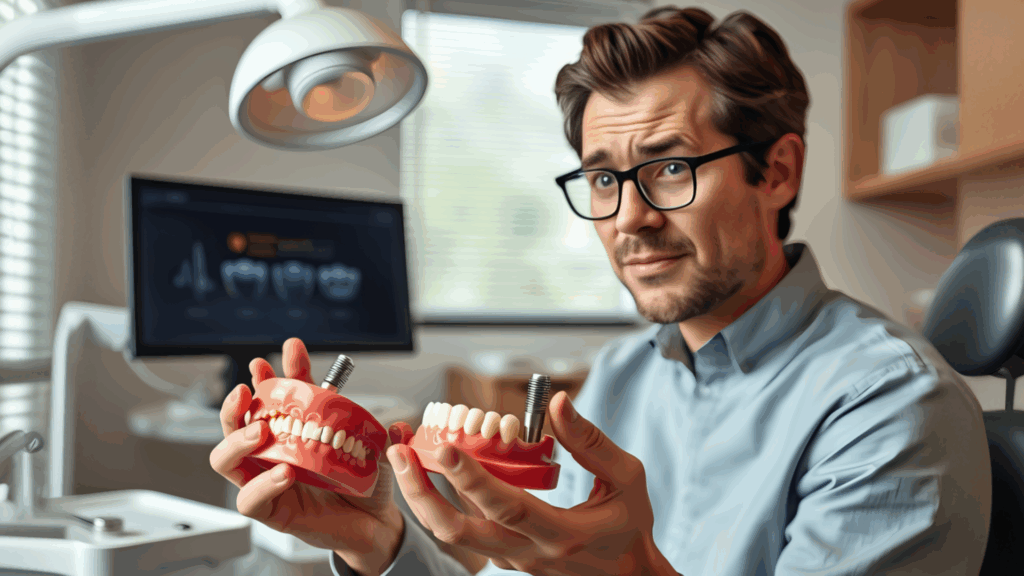
Are“Affordable Dentures” Costing You More in the Long Run?
For many patients, dentures seem like the obvious choice for tooth replacement—they’re more affordable upfront, widely available, and seem simple enough to maintain. But the reality is that dentures come with a hidden set of costs that go beyond the initial price tag.
At Kraja and Sidhu Dental, we understand that every patient’s needs are unique, and your tooth replacement should fit your lifestyle, not just your budget. This guide will uncover the often-overlooked, long-term price you pay for dentures and compare them with dental implants (a more stable and long-lasting alternative).
Now, let’s break down the true costs—both financial and emotional—so you can decide what’s best for your smile.
Dentures or Implants: Which is More Cost-Efficient?
Here’s the breakdown of the initial out-of-pocket costs for each treatment to get you started:
- Dentures: When comparing dentures vs. implants, many patients are drawn to the upfront cost of dentures. The cost of full out-of-pocket cost of dentures ranges from $1,000 to $5,000. The initial price tag for dentures might seem like a win, but they require constant adjustments, replacements every 5-7 years, and the use of adhesives. Add to this the emotional cost of dealing with dentures that may slip or cause discomfort, and the price starts to climb.
- Implants: Yes, implants are a more substantial investment upfront, ranging from $2,000 to $20,000 per set, but they are permanent. Once placed, implants provide a stable, secure solution that looks, feels, and functions like natural teeth, with minimal maintenance.
While dentures might seem cheaper on day one, the maintenance costs often pile up, making dental implants an even cheaper dental service in the long run. Implants often save patients money in the long run by eliminating the need for frequent replacements and adjustments.
Dentures come with a hidden set of costs that go beyond the initial price tag. Which brings us to the next point.
Denture Maintenance Compared to Implant Aftercare – How Later Saves You Money
When considering dentures vs. implants, ongoing maintenance plays a major role in the overall price of each solution. Dentures, in particular, require frequent adjustments, relining, and replacements, all of which require frequent (and pricy) visits to the doctor. Dental Implants, by contrast, need far less upkeep once they are placed, saving you time and money in the long term.Dentures vs. Implants – Calculating the Total Cost of Ownership Over 10 Years
Here’s a closer look at the typical maintenance and procedural requirements for both dentures and implants over time. We based our assumptions on the approximate average price of quoted dental procedures in Maryland over the last year.| Procedure | Dentures | Implants |
|---|---|---|
| Initial Placement | $1,000 – $5,000 (includes multiple fittings) | $8,000 – $20,000 (one-time procedure) |
| Annual Check-up | $100 – $200 (adjustments needed annually) | $100 – $200 (standard exam) |
| Relining (every 2 years) | $300 – $500 per reline | Not needed |
| Replacement (every 5–7 years) | $1,000 – $5,000 | Not needed (implants last 20+ years with care) |
| Denture Adhesive (annual) | $100 – $150 (recurring cost) | Not needed |
| Cleaning & Hygiene Products | $50 – $100/yr for special cleaners | Standard dental products (same as natural teeth) |
| Total Costs of Maintenance (10 Years) | $6,000–17,500 (worst case) | $1,000–2,000 |
How Dentures Affect More Than Just Your Teeth
Living with dentures brings certain limitations that many patients don’t initially consider. Beyond just caring for them, dentures can affect one’s ability to eat certain foods, how one speaks, and overall comfort during daily activities. Understanding these adjustments is crucial for making the best decision about one’s oral health.
Eating with Dentures
If you are looking to improve your bite force with Dentures – think again. Denture wearers report only a 30% chewing efficiency improvement while 90% of dental implant patients are completely satisfied with the implants regarding their ability to chew various kinds of food.
Adjusting to what you can eat with dentures becomes challenging. Many foods that are hard, sticky, or chewy – like apples, steak, or chewy candies, become difficult to eat. Over time, these restrictions can affect not only your diet but also your overall nutrition and health.
Speaking with Dentures
Over time, dentures that don’t fit well can cause discomfort, leading many wearers to feel self-conscious about speaking or eating in social situations. Many patients report avoiding social interactions due to anxiety about their dentures due to slipping or making noise.
Speech can also be impacted when wearing dentures, especially if they don’t fit properly or if your gums have shifted. Dentures can often slip or shift when you speak, making it harder to enunciate clearly.
Living with Dentures (and Bone Loss)
Daily care of dentures involves using special cleaning products, adhesives, and extra time each day for cleaning and maintenance. Over time, these tasks can feel cumbersome and lead to emotional fatigue for some patients. Additionally, bone loss is a long-term consequence of wearing dentures, as they do not stimulate the jawbone, unlike natural teeth or implants. In fact, poorly fitting dentures is one of the main reasons of bone loss, so they do the opposite.
Where Implants Offer Relief Compared to Dentures
In contrast, implants provide a much more natural experience in terms of eating, speaking, and living:
- They integrate directly into your jawbone, providing a stable foundation that mimics the look and feel of natural teeth. So, unlike dentures, they give patients a significant boost in confidence as implants fixate on your teeth, minimizing any potential movement.
- They also offer significant improvements in biting efficiency, allowing patients to enjoy the foods they love without restriction.
- Finally, they are much sturdier and require less maintenance, reducing the lifestyle load on patients. In fact, the NIH Study on Denture and Implant Longevity confirmed that dental implants have a 95% survival rate over 10 years. This proves that implants boast significantly higher survival rates vs. Dentures, which only have 50%. Dental implant restoration services can help you further prolong their lifetime (without the need for replacement).

Dental Implants vs. Dentures Comparison Table for Patients
When considering dentures or implants, patients need a clear understanding of how each option impacts not just their wallets but also their daily lives. To make this choice easier, we’ve laid out a comprehensive comparison of dentures vs implants, so you can see how these two options measure up in terms of cost, comfort, convenience, and long-term value.| Category | Dentures | Implants |
|---|---|---|
| Initial Cost | $1,000 to $5,000 | $8,000 to $20,000 |
| Approx. Maintenance Costs for 10 Years | $6,000–17,500 (worst case) | $1,000–2,000 |
| Chewing Efficiency | 30% of normal chewing function | 85–90% of normal chewing function |
| Dietary Restrictions | Must avoid hard, sticky, chewy foods | No restrictions; natural chewing |
| Comfort | Can cause irritation; adhesives often needed | Feels like natural teeth; no adhesives |
| Durability | 5–7 years before replacement | 20+ years with proper care |
| Bone Health | Does not prevent bone loss | Prevents bone loss and preserves jawbone |
| Aesthetic Appeal | May look less natural; visible hardware | Looks and feels like natural teeth |
| Confidence / Social Impact | Possible embarrassment; slipping issues | Boosts confidence; stable and secure |
| Long-Term Costs | Higher due to adjustments, relines, replacements | Lower due to minimal maintenance |
Making the Right Choice for Your Smile and Lifestyle
In the debate between dentures vs. implants, it’s clear that while dentures may seem like the more affordable choice upfront, the hidden costs—both financial and emotional—make them a less ideal long-term solution. So, is it time to rethink the “affordable dentures” myth? For most patients, implants are not only a smarter financial investment but also a way to regain control over their daily life—allowing them to eat, speak, and smile without worry.
Ready to explore how dental implants can improve your life? Schedule a consultation with our doctors today, and let’s find the perfect solution for your smile. Your long-term comfort and confidence are worth it!